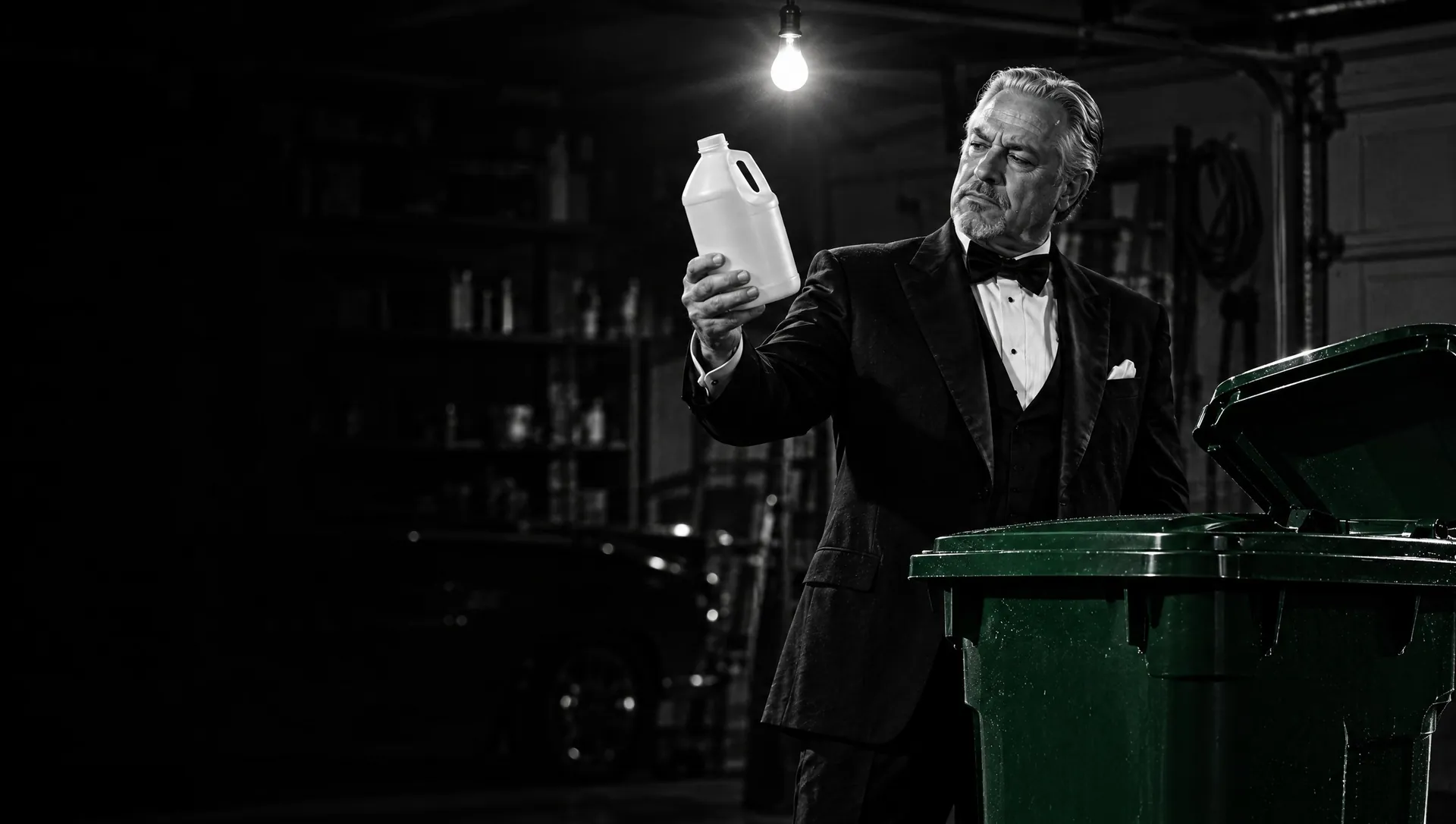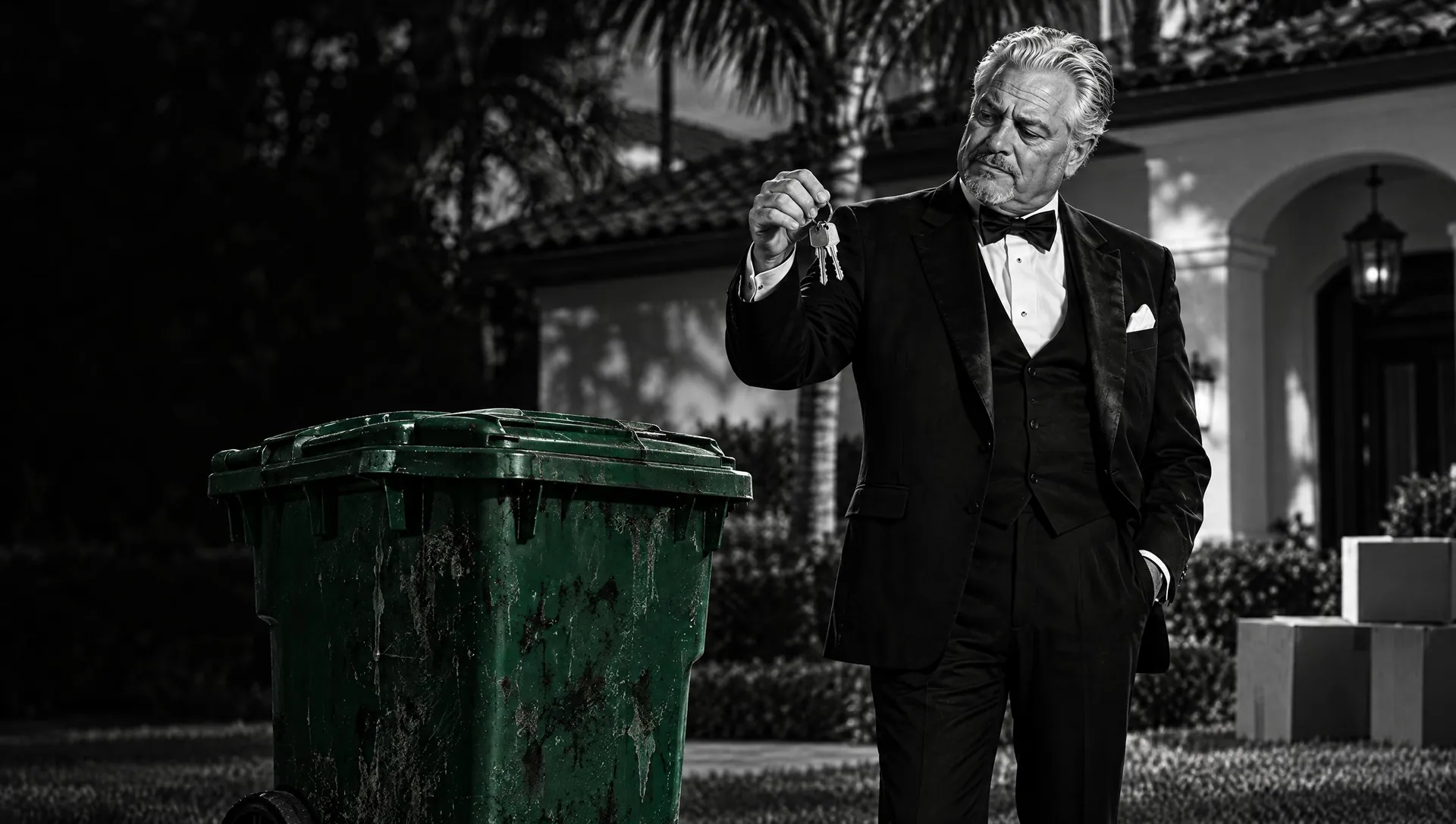
A trash bin that is never cleaned does not just get a little dirtier each week. It builds layers: a film on the walls, a hardened crust in the base, residue packed into the hinge and the lid seal, and a smell that is now coming from the plastic itself rather than from whatever is in the bag. After a few South Florida summers, most carts still have a usable shell, but they need a real reset, not a rinse.
Most people never see this happen, because it happens slowly and at the bottom of a cart nobody looks into. Here is what builds up, roughly in the order it happens.
In this scene · 6 questions
What builds up first?
A thin film on the inside walls. It starts with the first bag that leaks — juice from food scraps, liquid from a split bag, condensation running down the plastic on a hot day.
That liquid carries fats, sugars and proteins. When it dries, it does not all evaporate. Some of it bonds to the plastic, and bacteria settle into it. Early on the film is barely visible: the bin looks clean enough and only smells when the lid has been shut in the heat. This is the stage where a proper wash takes the least effort.
What happens after the first year?
The base channel fills. Every cart has a channel or recess at the bottom where liquid runs and collects, and it never fully dries because it is the lowest point and the least ventilated.
Each week adds a little more: another leak, another rain shower through a lid left open, another layer of the same film. Over a year it becomes a dark, sticky sludge that you can see if you tip the cart and look. This is the layer responsible for the smell most people notice first — sour, sharp, and stronger on hot afternoons. We covered it on its own in the black slime at the bottom of a trash can.
Why does it get worse faster in Florida?
Heat, humidity and rain, all year.
Bacterial breakdown runs faster in warm conditions, and a cart standing in the sun gets hot inside. Humidity keeps the base from ever drying out. Summer storms can add water through the lid or the gaps around it, and that standing water becomes a breeding site for flies and mosquitoes. A bin in a cooler, drier climate goes through the same process, just more slowly.
What does a bin look like after five years?
Layered, stained and permanently smelly — until it is cleaned properly.
By this point you are usually looking at:
- A hardened crust in the base that has dried and re-wetted many times. It is no longer sludge you could pour out; it has to be broken up.
- Residue in every seam and hinge, including the underside of the lid and the lip where the lid closes. These spots never get touched by a hose.
- Staining through the surface of the plastic. Carts are made of polyethylene, and years of residue can discolor it even after the dirt is gone.
- Recurring pests. Flies, roaches and, in some neighborhoods, rats treat the cart as a food source. Maggots are common in the warm months — here is what that means and what to do.
- A smell that returns within days of a rinse, because the source is the layer on the plastic, not the trash inside.
Can a five-year-old bin be cleaned, or does it need replacing?
In most cases it can be cleaned. The plastic in a city cart is thick and durable, and the buildup, however bad it looks, sits on the surface.
What it takes is heat and pressure. Hot water loosens the fats and proteins that hold the crust together, and real pressure — far more than a garden hose — lifts it off the walls and out of the base. Scraping by hand helps with the worst of the crust but cannot reach the seams. Some staining can remain after a deep clean; the smell, the residue and the bacteria come out.
The time to ask your city or hauler for a replacement cart is when the plastic itself has failed: a cracked body, a broken lid or hinge, or a hole in the base. Those are damage, not dirt, and cleaning will not fix them.
Is the first cleaning different from the ones after it?
Yes. The first visit on a long-neglected cart is a reset and takes the most work. After that, a cart cleaned on a regular schedule never gets the chance to build layers again, so each later visit is a quicker job.
That is also why pricing is set up the way it is. A single one-time reset is $65. On a plan, monthly is $30 a visit and every 3 months is $50. Every price covers two bins, each additional bin is $10, and the monthly plan's year is $30 a month, or $324 paid up front — 10% off the $360. The details are on the pricing page.
The short version
An uncleaned bin builds up in layers: a film on the walls, sludge in the base, then a hardened crust and residue in every seam, with a smell that now comes from the plastic itself. Florida heat and humidity speed every step. A five-year-old cart can almost always be saved with hot water under pressure — replace it only if the plastic is cracked or broken.
One reset brings it back; a regular schedule keeps it there. Book online and we come on your collection day, after the truck has emptied the cart.