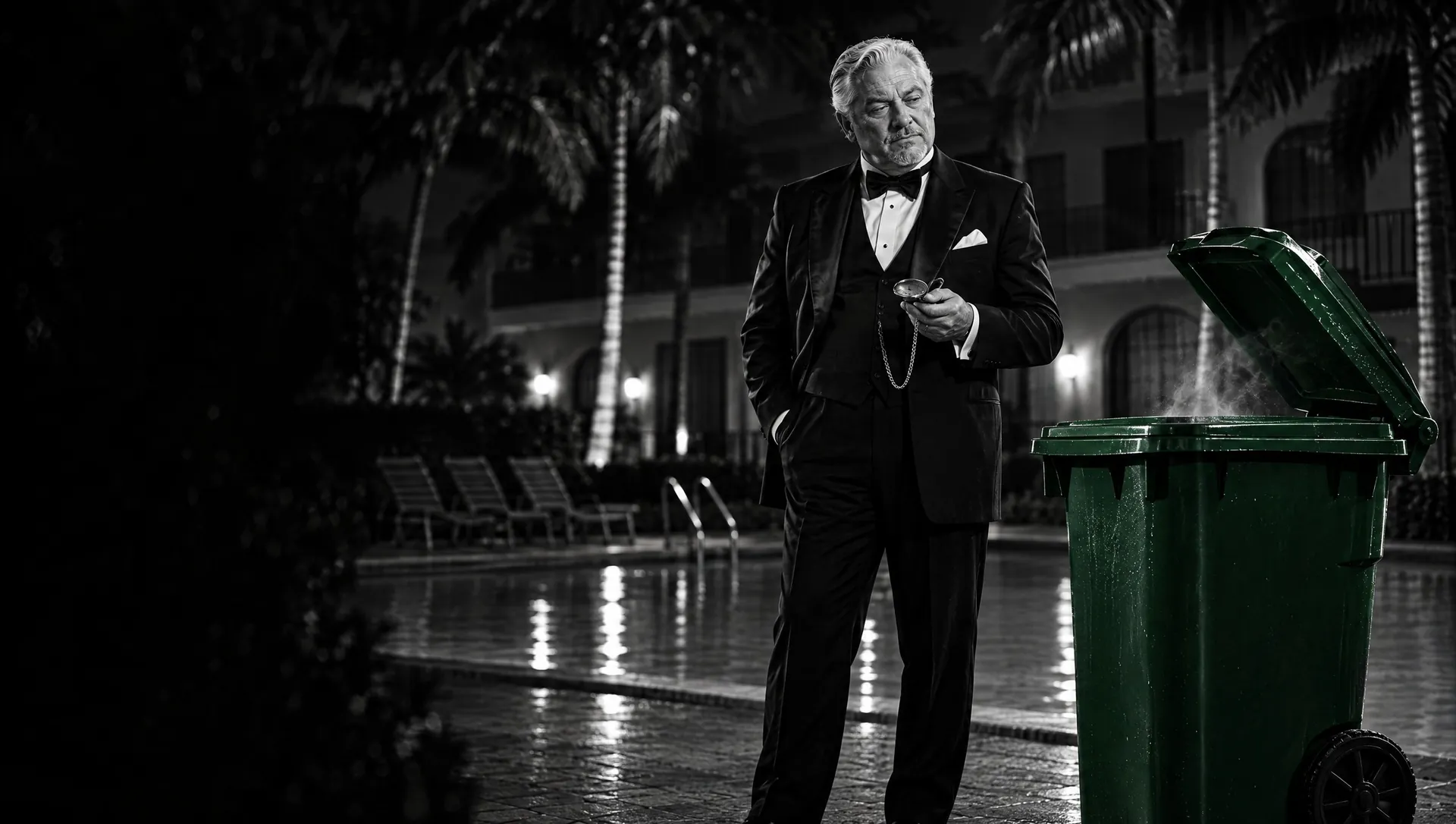
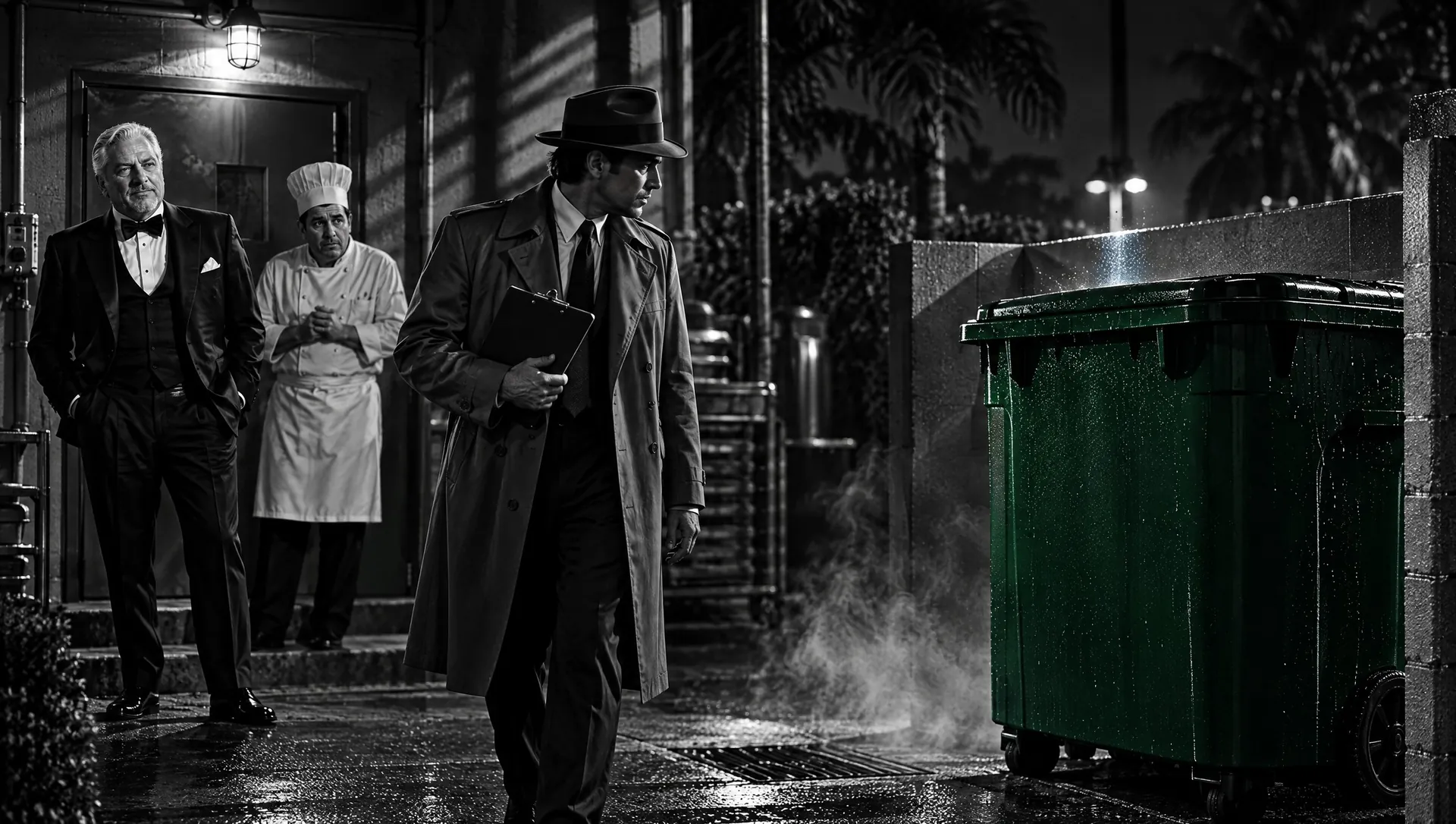
A restaurant's dumpster enclosure sits between the parking spot and the back door, so it is often the first thing an inspector walks past, and the smell reaches them before the kitchen does. That smell is not today's garbage; it is months of bonded residue a hose was never able to remove.
Most restaurant owners prepare for an inspection from the inside out. Walk-in temperatures, sanitizer buckets, date labels, hand sinks. But the back of the building is where a lot of inspections physically begin, because the dumpster enclosure sits between the parking spot and the back door.
We clean dumpsters, we are not inspectors, and nothing here is a compliance checklist. What we can tell you is what a neglected waste area looks and smells like from three feet away.
In this scene · 6 questions
- 01Why does the dumpster get attention at all?
- 02What are the signs of a dirty dumpster enclosure?
- 03Does a dirty enclosure really say anything about the kitchen?
- 04Why can't restaurant staff just clean the dumpster themselves?
- 05What actually gets a commercial dumpster clean?
- 06How often should a restaurant dumpster be cleaned?
Why does the dumpster get attention at all?
Because a restaurant's waste area is generally treated as part of the premises, not as something outside it.
That surprises people. The kitchen gets scrubbed nightly and the enclosure gets nothing, on the assumption that the hauler deals with it. The hauler does not. A truck lifts the container, empties the bags and sets it back down — nothing in that washes the inside walls, the floor of the container, the lid, or the pad it sits on. So the enclosure accumulates without interruption, and unlike a household bin it never gets a dry week. It is refilled the same night it is emptied.
What are the signs of a dirty dumpster enclosure?
Four things, roughly in the order a person encounters them: the smell, the pad, the flies and the lid.
The smell, from the approach. Not the sharp smell of today's waste — the deeper, sweeter one that comes off residue baked onto warm plastic and steel. In August it carries across a parking lot.
The pad under the container. The most telling surface back there. A dark, tacky halo around the base means liquid has been running out of the container and drying in place for a long time. Staff never look at it — they open the gate, throw the bag and leave.
Flies, and where they are. A few flies near an open dumpster are unremarkable. Flies on the outside of a closed container, on the gate frame, on the wall, mean the food source is the container itself rather than what is in it.
The lid and the rim. Coated, crusted, sometimes stuck. If the lid is bad, nothing back there has been cleaned in a long time.
Does a dirty enclosure really say anything about the kitchen?
A dumpster enclosure is not a food-contact surface. But it is an unusually honest indicator, because it is the one area with no customer looking at it and no shift checklist covering it. A kitchen can be cleaned hard the morning of an inspection. An enclosure cannot be faked in an hour — bonded residue takes heat and pressure to remove, not a mop and a hose. Fair or not, a bad enclosure suggests a standard that is maintained where it is seen.
The link is also physical, not only inferential. Roaches and rodents drawn to a contaminated enclosure do not stay in it. They travel along the wall and in through the back door every time it is propped open for a delivery. Pest activity inside a restaurant very often starts thirty feet outside it.
Why can't restaurant staff just clean the dumpster themselves?
Because the tools available at the back door — a hose, a deck brush, bleach — do not remove what has built up in a dumpster.
A hose at cold tap pressure moves loose debris and drains it across the pad. Degreaser and a deck brush help the floor and do little for the inside walls of a container nobody can reach into. Bleach poured down a dumpster masks the smell for part of a shift and leaves the organic layer producing it in place. And whatever your crew rinses out has to go somewhere — on a restaurant pad, toward the drain or the lot. We bring our own water and tidy the area before we leave.
What actually gets a commercial dumpster clean?
Heat and high pressure, on the inside walls, the lid, the rim and the pad — as one job rather than four.
The residue in a restaurant dumpster is bonded fat and protein. Hot water at pressure lifts it off the surface instead of pushing it around — the difference between a container that smells better for a day and one that smells better for a month. The enclosure floor matters just as much, because a clean container standing on a contaminated pad draws flies by the second evening.
Timing is the other half: after collection, when the container is as empty as it gets, and outside your service hours. The BinFather's commercial and dumpster cleaning is scheduled that way by default and is self-contained, so nothing is drawn from your water or power.
Commercial work starts at $99 for a single container and is quoted per job rather than off a price list, because a single front-load dumpster behind a café and six cart banks at a hundred-unit building are not the same job. Our residential prices are published because household bins are comparable to each other; commercial containers are not.
How often should a restaurant dumpster be cleaned?
More often than a house: most restaurant operators end up on a monthly cycle, with high-volume kitchens going shorter. The reason is volume of organic waste rather than calendar time.
A kitchen producing food waste daily builds a new layer continuously, and in South Florida heat it does not pause for winter. The honest test is the approach test: if you can smell the enclosure from your parking space, the interval is too long. If you run several locations across Broward and Palm Beach, one schedule usually covers all of them, billed to the business rather than to each manager.
The short version
The enclosure is part of the premises and it is often the first thing anyone walks past. What shows back there — the smell on approach, the tacky halo under the container, flies on a closed lid — is not today's garbage; it is months of bonded residue a hose was never able to remove. It is also the source of most pest activity inside the building, which makes it a kitchen problem in a parking-lot disguise.
Get a quote for your dumpster and enclosure. Request a commercial quote before your next inspection does.