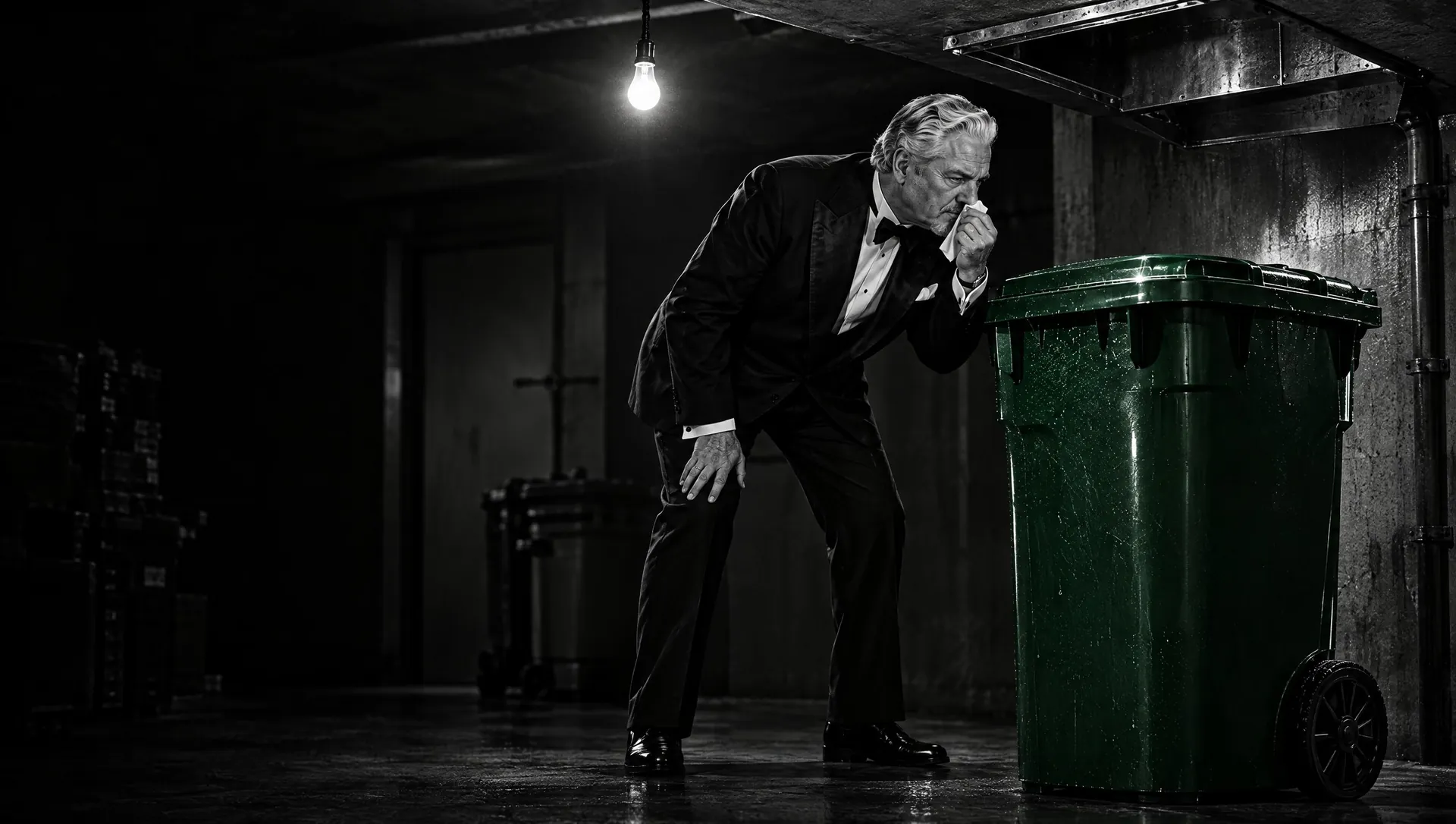
A trash chute room in a South Florida condo or apartment building is usually the smelliest room in the building, because every floor's garbage lands in the same warm, enclosed space. Trash chute room cleaning means washing the carts, the chute opening area and the room itself, on a schedule set by the association or property manager, after collection.
Residents open a small door in the hallway and the bag disappears. Where it goes is a ground-floor room most of them never see, doing the work of a whole building.
In this scene · 7 questions
- 01Why is the trash chute room the smelliest room in a building?
- 02What causes the garbage chute room smell to spread to the hallways?
- 03What does trash chute room cleaning actually include?
- 04How often should a condo trash room be cleaned?
- 05Who is responsible for arranging trash chute room cleaning?
- 06Where in South Florida does trash chute room cleaning matter most?
- 07How much does condo trash room cleaning cost in South Florida?
Why is the trash chute room the smelliest room in a building?
The trash chute room smells worst because it collects the whole building's waste in one enclosed, warm room that never gets a break.
Four things stack up there:
- Everything arrives in one place. A curbside cart serves one household. A cart under a chute serves every floor above it.
- Bags fall, and bags split. A bag dropped several storeys hits the cart hard. Liquid from a torn bag runs down the cart walls and onto the floor around it.
- Not everything lands in the cart. Some of it catches the rim, the edge of the chute opening, or the floor beside the cart.
- The room is closed and warm. In a South Florida summer there is nowhere for the heat and moisture to go, so the residue on every surface keeps feeding the smell.
Emptying is not cleaning. Collection takes the bags away and leaves the film in the cart, the drips on the floor and the crust around the opening where they were.
What causes the garbage chute room smell to spread to the hallways?
The garbage chute room smell spreads because the room is connected to the rest of the building: through the chute itself, through the doors staff and residents use, and through the corridors next to it.
The people closest to the room notice first — the ground floor, the lobby staff. Then come the flies, and the roaches that travel along the walls. By the time a complaint reaches the board, the room has been building up for months.
What does trash chute room cleaning actually include?
Trash chute room cleaning, as The BinFather does it, covers three things: the carts, the chute opening area and the room itself.
- 01The carts. Inside walls, base, rim and lid, with heated water at pressure — the base and seams are where the liquid settles and hardens.
- 02The chute opening area. The area around the opening where the waste comes out into the room, where splashes and residue build up.
- 03The room. The floor, the lower walls and the area around and under where the carts stand, so a clean cart is not rolled back onto a dirty floor.
We bring our own water, so nothing is drawn from the building. The dirty water goes into a collection tank on our truck or trailer — nothing is left on your property.
Not included: the inside of the chute shaft, compactors or other machinery, and pest control. Those are separate trades. What we remove is the residue that feeds the smell and the insects.
How often should a condo trash room be cleaned?
A condo trash room should be cleaned on a regular schedule rather than after complaints, and the right frequency depends on the building: how many units feed the chute, how many carts there are and how fast the room turns.
A large tower needs more frequent visits than a small mid-rise, and summer is harder on the room than winter. That is why we look at the room first and then suggest a schedule. Every visit is timed after collection, when the carts are as empty as they get, and outside the hours residents are coming and going.
Who is responsible for arranging trash chute room cleaning?
In a condominium, the association is responsible, and the property manager usually arranges the work on the association's behalf.
The trash room is part of the common elements, and Florida's condominium law is direct about who maintains those. Section 718.113(1) of the Florida Statutes says that "maintenance of the common elements is the responsibility of the association", except where the declaration assigns limited common elements to a unit owner. In a rental apartment building, the owner or management company runs the building and arranges the same work.
Residents are responsible for how they use the chute — bagging waste, tying bags shut, not forcing boxes down — but not for cleaning the room.
Where in South Florida does trash chute room cleaning matter most?
Trash chute room cleaning matters most where the towers are: the high-rise corridors along the coast of Miami-Dade and Broward.
In Aventura, the towers along Biscayne Boulevard and the Intracoastal send their waste down chutes into ground-floor rooms. In Sunny Isles Beach, the oceanfront towers along Collins Avenue do the same, and Hallandale Beach's high-rises along the beach follow the same pattern.
How much does condo trash room cleaning cost in South Florida?
Condo trash room cleaning in South Florida starts from $99 for a single container; the final price depends on how many containers there are, their size and how often they need cleaning.
The price moves with the job, because a room with two carts and a tower with several rooms are different jobs. See how we work with buildings on our commercial cleaning page; the bill goes to the association, not to owners.
The short version
The trash chute room is the smelliest room in most condo towers because the whole building's waste lands there, in the heat, every day. Cleaning it means the carts, the chute opening area and the room — not the shaft. The association arranges it, on a schedule, after collection. Leave the room alone long enough and it starts running the building from the ground floor.