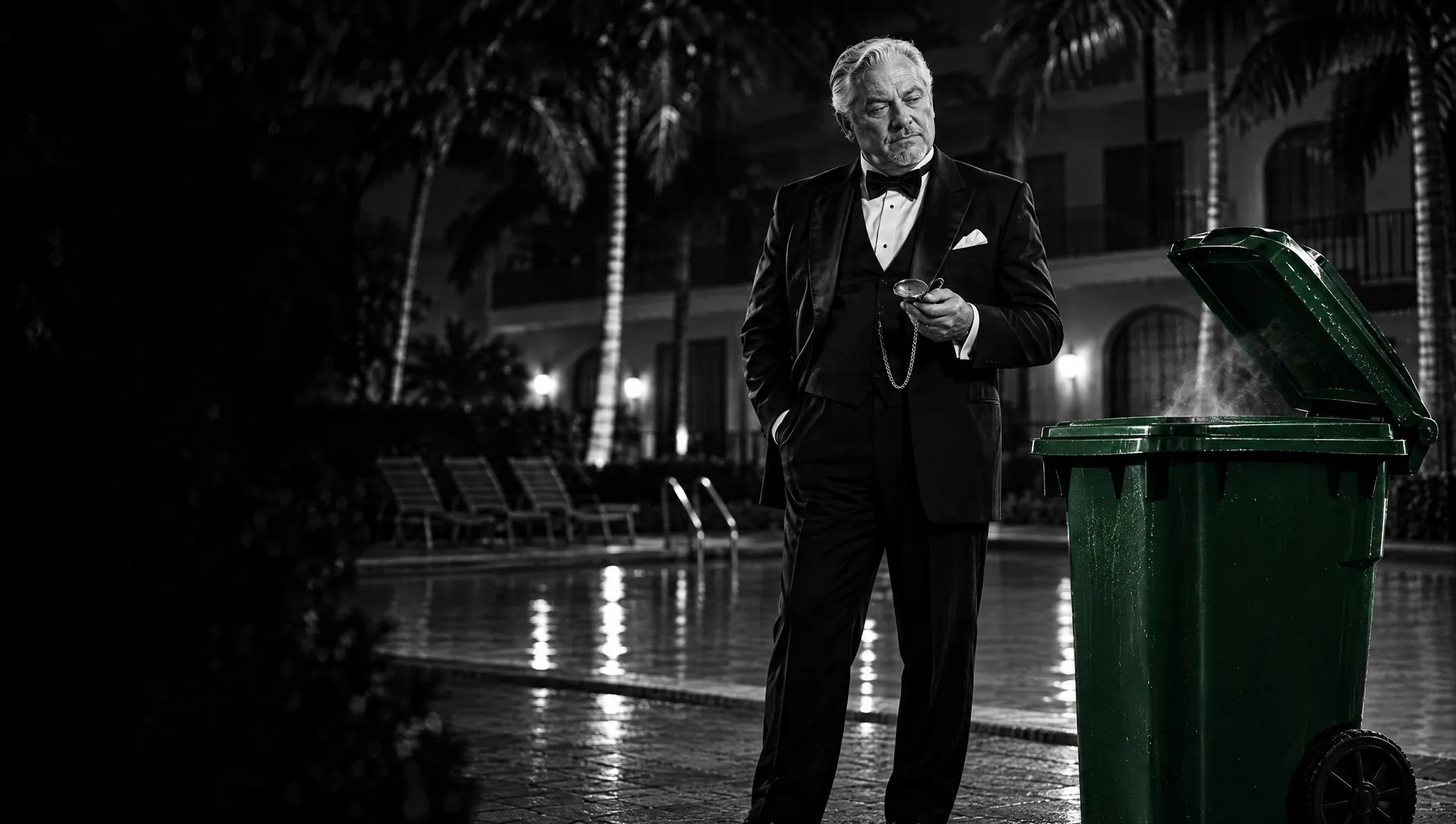
A trash can in South Florida needs the most attention during the wet season, which the National Weather Service dates from May 15 to October 15. Heat, humidity and rain make residue rot and flies breed faster then. The cooler dry season slows a trash can down but never stops it, so the interval should tighten in summer, not stretch in winter.
In this scene · 6 questions
- 01When is the rainy season in South Florida?
- 02Why does a trash can get worse in the summer?
- 03Does a trash can stay clean longer in the winter?
- 04Should you change how often you clean your trash can by season?
- 05What should you do before the wet season starts?
- 06What should you do after the rainy season ends?
When is the rainy season in South Florida?
The South Florida rainy season runs from May 15 to October 15. The National Weather Service office in Miami defines the wet season by those dates and describes it as the part of the year when 60 to 70 percent of the average yearly rainfall falls. The rest of the year, mid-October to mid-May, is the dry season.
For a trash can in Broward, Miami-Dade or Palm Beach County, wet and dry are the real calendar.
Why does a trash can get worse in the summer?
A trash can gets worse in a South Florida summer because heat speeds up the bacteria that break down food residue, humidity keeps that residue wet, and afternoon rain adds water to whatever is already in the cart. Wet, warm, decaying material is exactly where smells come from and where flies lay eggs.
Three things happen at once:
- Residue stays wet. In the dry season a thin film on the cart wall can dry out between collections. In the wet season it rarely gets the chance.
- Rain gets in. A lid left slightly open, or a cart without a tight seal, collects water at the bottom. That water mixes with whatever leaked from the bags and becomes a pool of liquid residue.
- Flies move faster. The University of Missouri Extension notes that house flies lay eggs on moist garbage and complete their life cycle in about 14 days, depending on temperature. Warm weather pushes that cycle along, so a cart that goes a few weeks without attention in July has time for flies to breed in it.
Does a trash can stay clean longer in the winter?
A trash can does stay clean somewhat longer in a South Florida winter, because the dry season brings lower humidity, less rain and slightly cooler air. But it never gets cold enough here to stop the process, so the bin is slowed down, not switched off. A cart still builds residue in January; it just takes longer to turn.
This is the part that national advice gets wrong. Guidance written for colder states assumes several months when nothing grows in an outdoor bin. Our winters are mild, and a cart sitting in the sun on a dry February afternoon is still warm. If you stretch the interval for winter the way someone up north might, you start the next wet season with months of buildup already in the cart.
Should you change how often you clean your trash can by season?
You should not clean a trash can less often in the South Florida winter than you would be comfortable with all year, but you can give the summer extra attention. The honest rule is: pick the interval that works in the dry season, then make sure the wet season gets at least that much.
Here is how that plays out with the plans The BinFather offers, all of which cover two bins, with each additional bin $10:
- Monthly — $30 a cleaning. A one-year plan, paid $30 a month or $324 up front (10% off the $360 it costs month by month). It is the one we recommend for most homes because it covers both seasons without anyone having to remember anything. A cart cleaned every month never has time to turn, summer or not.
- Every 3 months — $50 a cleaning. Also a one-year plan, paid $50 a visit or $190 up front (5% off the $200). Four cleanings a year, so even the wet season never goes more than three months without one.
- One-time — $65, no subscription. Useful as an extra clean in the middle of a hard summer, or for a cart that has already gone too far.
The full breakdown is on the pricing page.
What should you do before the wet season starts?
Before the wet season starts in mid-May, get the trash can properly cleaned so it enters the summer empty of old residue. A cart that goes into June already coated has a head start on smell and flies; a clean one has nothing for the heat to work on.
A short checklist for late April or early May:
- 01Clean both carts — garbage and recycling. Sugar residue in a recycling cart draws ants and roaches in the heat too.
- 02Check the lid closes flat. A lid that sits open lets rain in, and standing water is the worst thing a summer cart can hold.
- 03Bag everything that is wet. Loose food and liquids are what build the film.
- 04Look at where the cart lives. Full afternoon sun runs it hot every day; deep shade keeps it damp. Neither is ideal, but knowing which one you have tells you how hard summer will hit it.
What should you do after the rainy season ends?
After the rainy season ends in mid-October, clean the trash can again to clear out everything the summer left behind. Months of wet residue, dried rainwater and fly activity leave a layer in the base and under the rim that the dry season will not remove on its own.
That makes mid-October a good moment for a one-time clean, especially if the cart has never been washed. It is also why we clean on your collection day, after the truck has emptied the cart: an empty cart is the only one that can be cleaned all the way to the bottom.
The short version
South Florida's wet season, May 15 to October 15, is when trash cans turn fastest; the dry season slows them down but never stops them. Do not stretch the interval for winter. Monthly covers both seasons; every 3 months is the lighter option, and still puts a clean inside the wet season.
We clean carts across 43 South Florida cities. Book online.