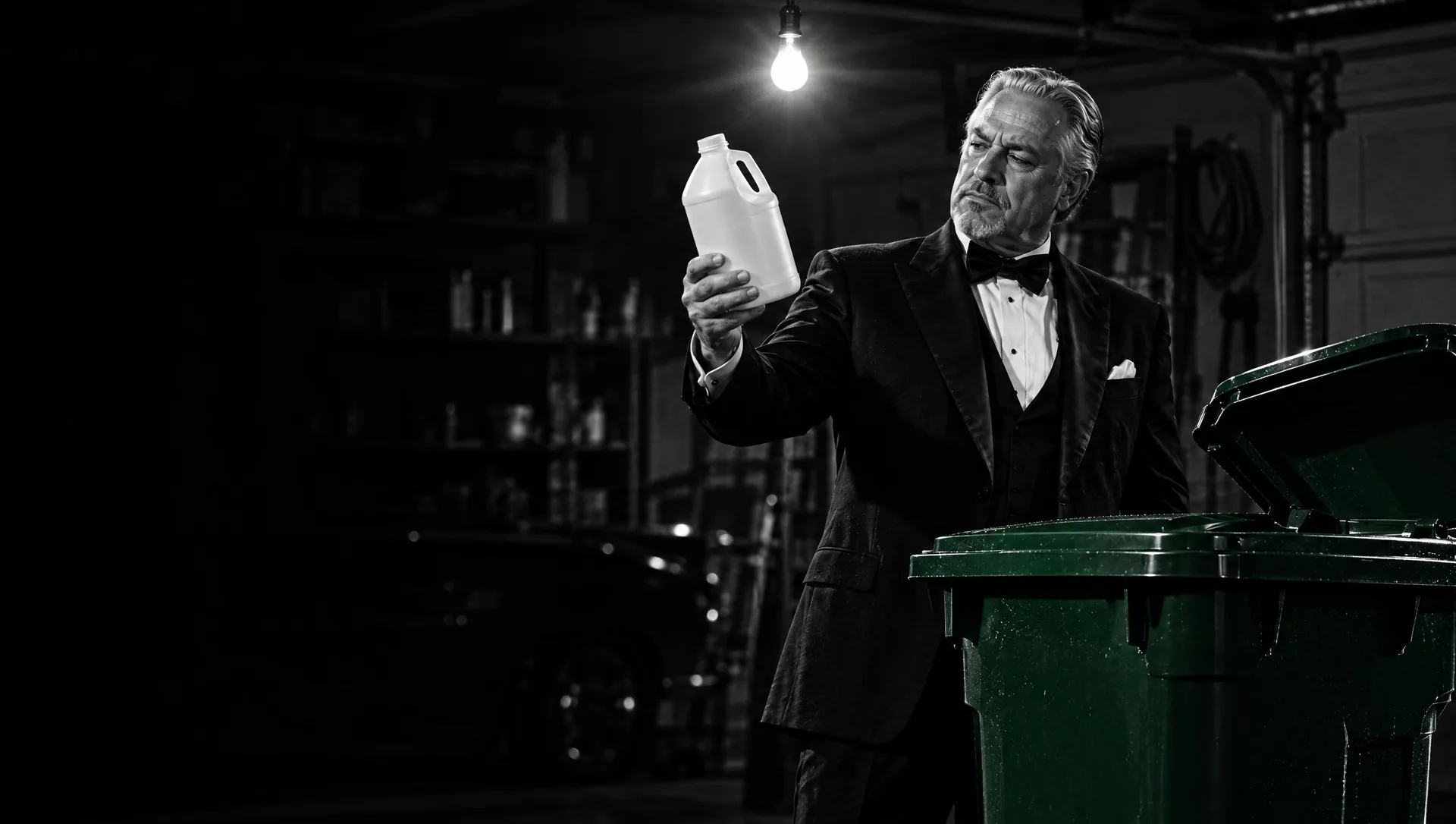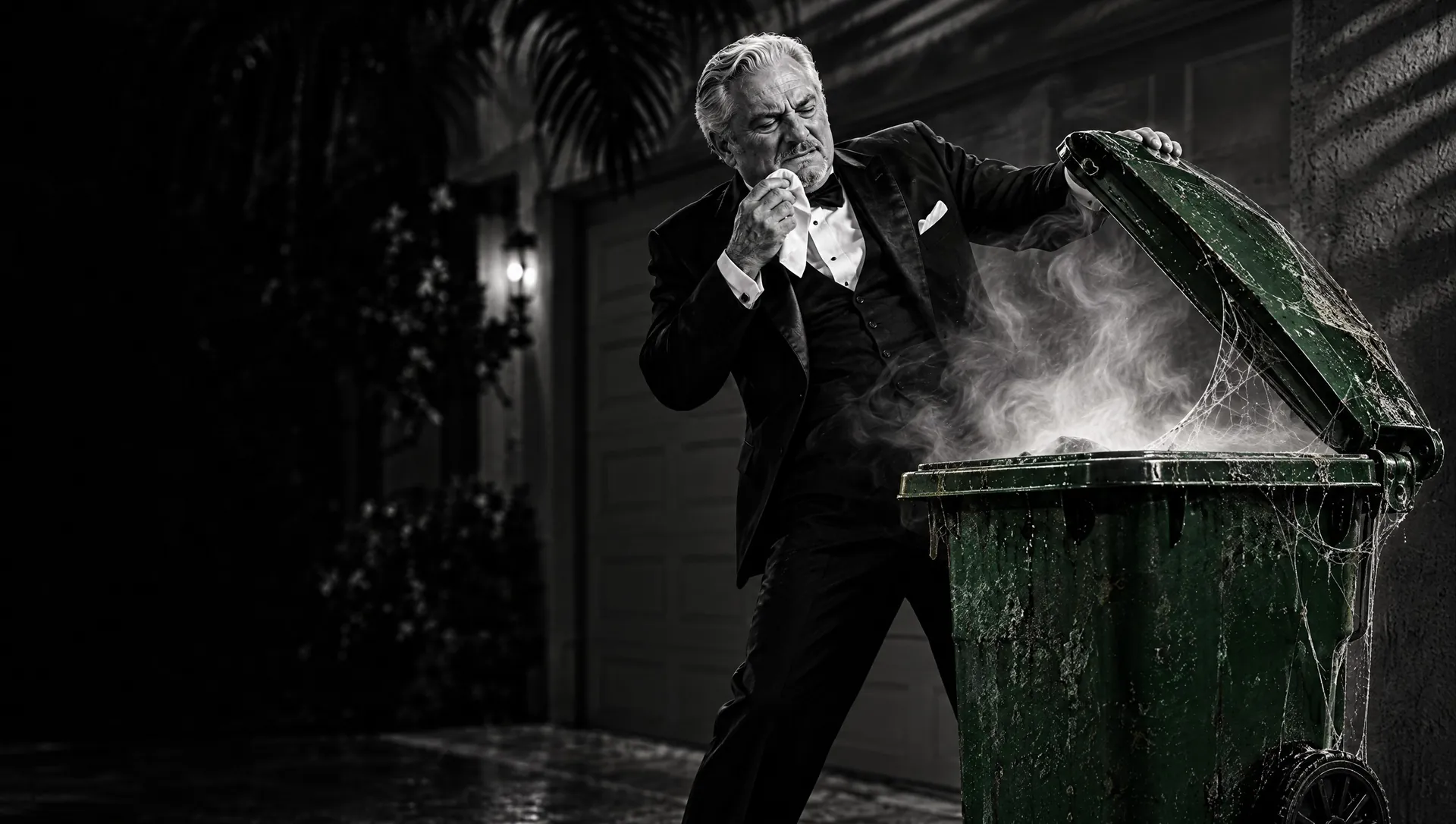
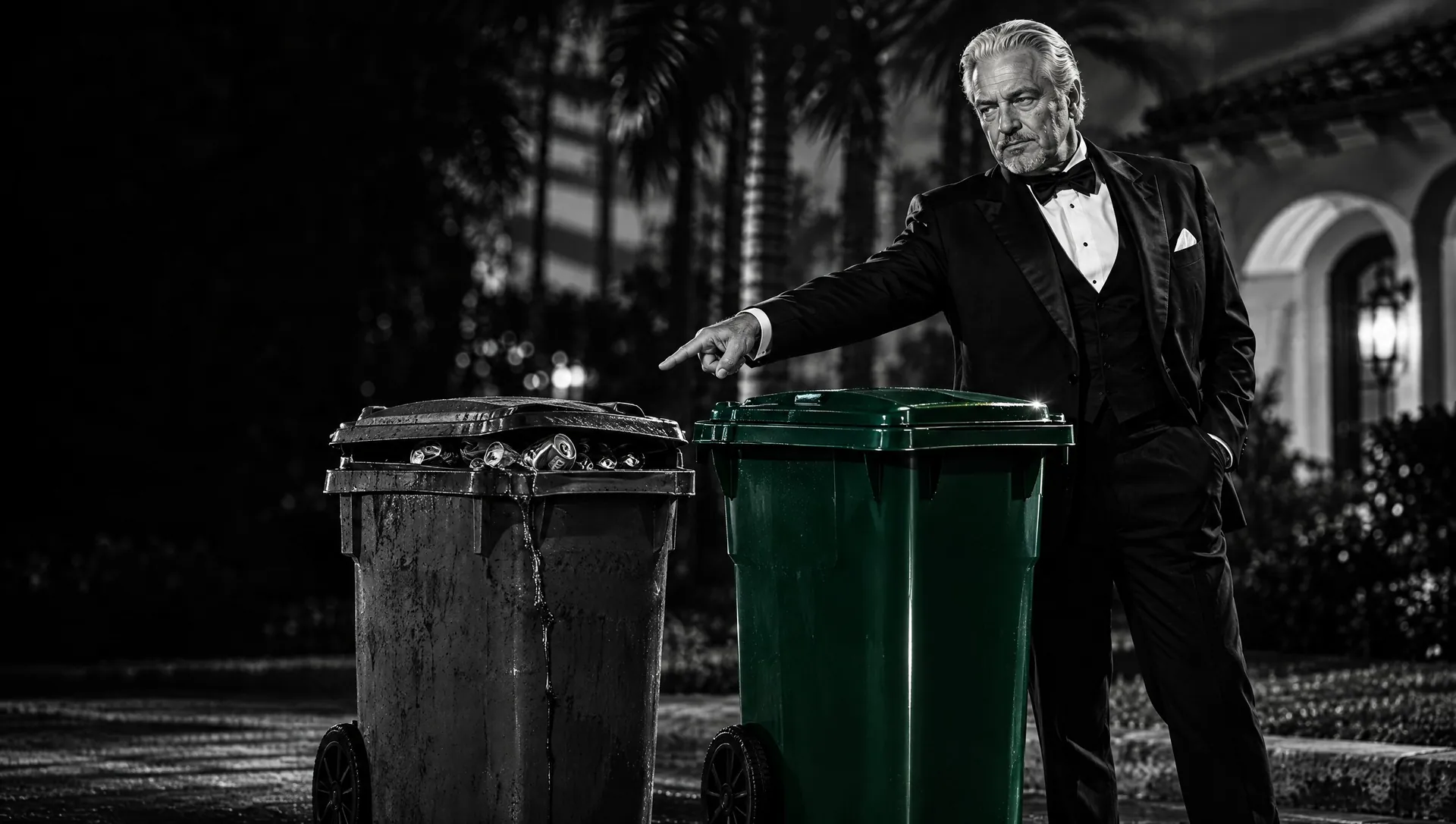
A recycling bin is often dirtier than the garbage bin beside it, because recycling goes in loose. The soda, beer, juice and sauce left in containers drips straight onto the plastic instead of into a bag, pools in the base channel and ferments in South Florida heat. Rinsing containers stops the next layer; it does not remove the one already there.
Most people wheel the recycling cart out without thinking about it. The garbage bin is the one they are slightly embarrassed by — the smell, the stain down the side. The recycling cart holds cans, bottles and cardboard, so how bad could it be.
Open both after a hot South Florida week and it is often the other way round.
In this scene · 8 questions
- 01Isn't a recycling bin just cans, bottles and paper?
- 02Why is a recycling bin often dirtier than the garbage cart?
- 03Why does a recycling bin smell sweet instead of rotten?
- 04What pests does a dirty recycling bin attract?
- 05Does rinsing containers fix it?
- 06What does a wet recycling bin do to paper and cardboard?
- 07How often should a recycling bin be cleaned?
- 08How do I keep a recycling bin cleaner between cleanings?
Isn't a recycling bin just cans, bottles and paper?
It is. And almost every one of those things arrived with something still inside it.
A can with a swallow of soda in the bottom. A beer bottle with a finger of flat beer. The milk jug nobody rinsed, the yogurt cup, the sauce jar with a ring of tomato around the neck, the takeout container that was "basically empty". Each carries a little liquid or an oily film, and each ends up on its side at some point during the week.
All of it ends up in the same place: the base of the bin.
Why is a recycling bin often dirtier than the garbage cart?
The bags — garbage has them, recycling does not.
Household garbage goes into the cart tied up inside a bag, so whatever leaks or ferments is held inside plastic and the cart wall is one layer removed from it. Recycling goes in loose, because that is how the sorting works. There is nothing between the residue and your cart.
So the drip a garbage bag would have caught runs straight down the inside wall and pools in the base channel, every week. Where recycling is collected less often than garbage, it also has longer to sit between pickups.
That is the whole reason the "clean" bin often turns out to be the dirty one: not worse contents, just nothing containing them.
Why does a recycling bin smell sweet instead of rotten?
A garbage bin smells like protein breaking down — heavy, sour, unmistakably meat. A recycling bin smells like sugar fermenting.
Juice, soda, beer, wine and sauce residue sitting in a closed plastic cart in Florida heat turns quickly, and the result is a lighter, sweeter, vinegary smell. People frequently do not connect it to the bin at all — they assume something is off with a drain or with the garage, and go looking in the wrong place.
The smell is coming out of a container you assumed was clean, which is exactly why it takes so long to find.
What pests does a dirty recycling bin attract?
Ants, fruit flies and roaches. Sugar residue is ant food. A film of dried soda on the inside of a cart is a reliable trail, and ants will work a recycling bin all season without ever touching the garbage cart beside it.
Fruit flies need a wet, fermenting surface to breed on, and the pooled liquid in the base channel is precisely that. Roaches are drawn to sugar and starch as readily as to meat. None of it requires anything dramatic in the bin — a fortnight of ordinary drink containers is enough.
Does rinsing containers fix it?
Rinsing helps more than anything else you can do at home, and it still does not clean the cart.
Rinsing controls what goes in from now on. It does nothing about the residue already bonded to the walls, the rim and the underside of the lid, or the liquid sitting in the base channel — and that layer is what is producing the smell. It stays through every collection, because the truck empties the bin, it does not wash it.
A hose does not solve it either. Cold water at hose pressure pushes debris around and drains out; it does not break the bond between a dried sugar film and the plastic. The bin looks better and smells the same by the afternoon.
What does a wet recycling bin do to paper and cardboard?
Liquid in a recycling bin soaks into the paper and cardboard sharing the cart, and it stays there — in a humid climate a wet box at the bottom of a cart does not dry out between collections. Wet fibre is not the same material as dry fibre to a mill, so keeping the bin dry keeps the paper in it worth something.
How often should a recycling bin be cleaned?
A recycling bin should be cleaned on the same schedule as the garbage cart. Most households treat the pair as one job, and The BinFather's pricing is built around that — every plan covers two bins, which for most homes is the garbage cart and the recycling cart together.
Monthly is $30, every 3 months is $50, and a single one-time clean is $65. Each additional bin beyond the two — a yard waste cart, a second garbage cart — is $10. The full price list is here, and the same rates apply across all 43 cities we cover.
How do I keep a recycling bin cleaner between cleanings?
- Tip liquids down the drain before the container goes in the cart. This is the one that matters most.
- A quick rinse is enough. Containers do not need to be spotless, they need to be empty.
- Do not bag your recyclables. It defeats the sorting, and the bag will be full of the same liquid anyway.
- Grease is a smell source whatever your program says about greasy cardboard — check your city's rules, and keep the oily half out where you can.
- Keep the lid closed and park the cart out of direct sun. Heat is what turns residue into a smell.
The short version
Recycling goes into the cart loose, so every drip lands on the plastic instead of inside a bag. Sugar residue ferments in the heat, the base channel holds liquid, and ants, roaches and fruit flies find it long before you do. Rinsing containers stops the next layer — it does not remove the one already there.
Two bins, cleaned together — $30 a month or $65 once. Book online and we will come on your collection day, after the truck has emptied both carts.