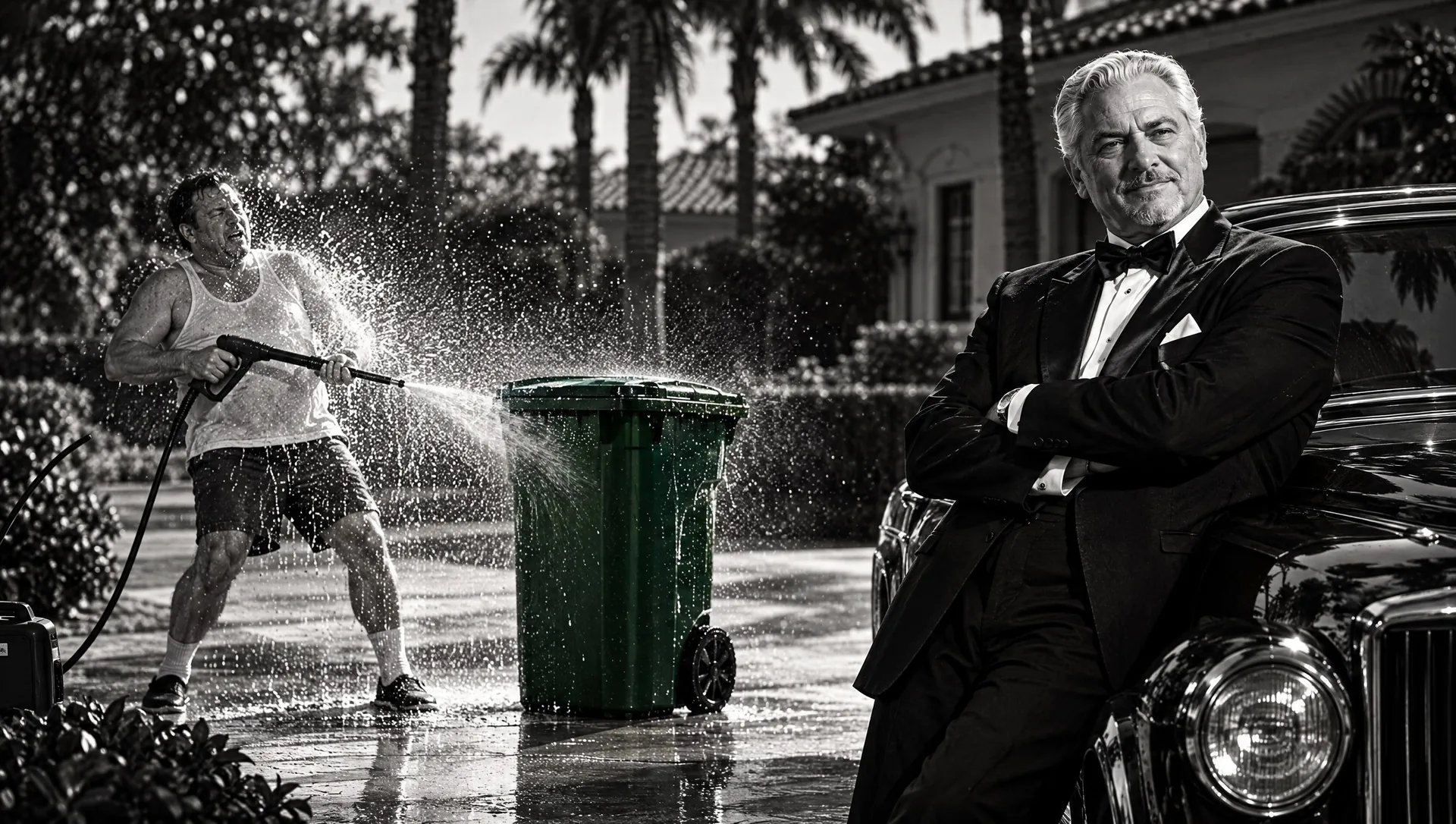
You can pressure wash your own trash can at home and get a real improvement: do it on collection day once the truck has emptied the bin, with a wide 25° or 40° tip, a foot away, top down, runoff kept off storm drains. The ceiling is cold water, which cannot break the bonded film, so the result lasts less time than you hoped.
We would rather tell you how to do this than sell you something you do not need. If you own a pressure washer and a free Saturday, here is the honest version.
In this scene · 5 questions
How do you pressure wash a trash can?
Pressure wash the bin on collection day, once the truck has emptied it, top down, with a wide fan tip. Cleaning a full bin is not possible and cleaning a half-full one is unpleasant and pointless.
- 01Choose your spot. Not on grass, not in a flower bed, and not where the runoff heads for a storm drain. A patch of gravel, a slope away from the house, or somewhere the water can soak into ground you do not care about.
- 02Tip the bin and empty the base channel first. Whatever is pooled at the bottom should go before you start, not get atomised.
- 03Use a wide fan tip — 25° or 40°. Never the red zero-degree tip. It will not clean better and it can gouge or perforate the plastic.
- 04Work top down, walls first, then the rim, then the underside of the lid, then the base last. The base is the dirtiest part and you want everything else already off before you get there.
- 05Keep a working distance — around a foot. Closer does not clean more; it just moves material sideways and risks the plastic.
- 06Rinse, then let it dry with the lid open, ideally in the sun. Drying matters more than people think. Bacteria need moisture.
- 07Then treat it. A wash without a follow-up treatment leaves the surface clean and unprotected. Anything you use should be safe around children and pets once dry.
Do that properly and your bin will be genuinely better than it was.
What mistakes make pressure washing a trash can worse?
Three mistakes undo the work: leaning on bleach, a narrow tip on the base, and washing on the driveway.
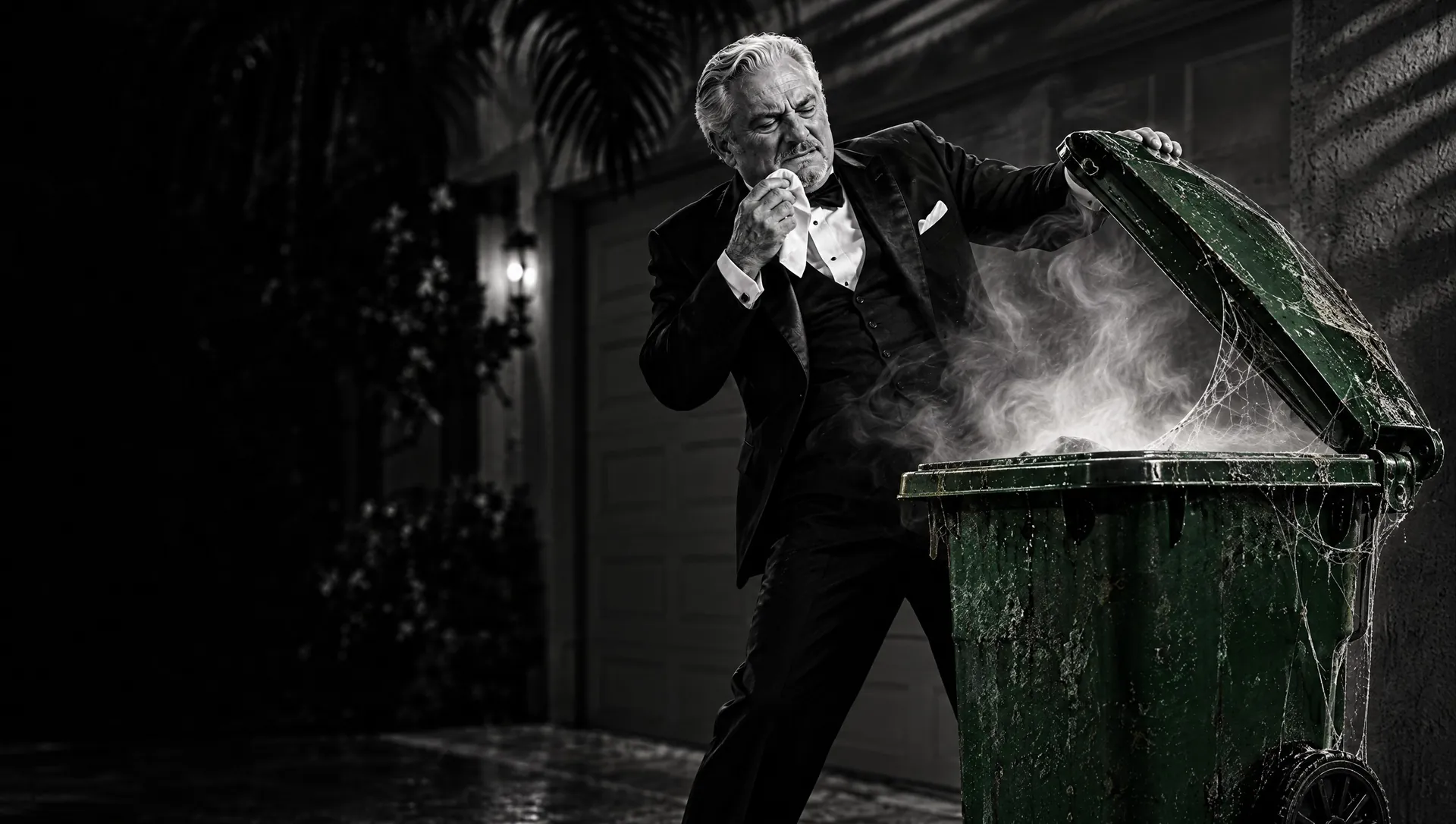
Using bleach as the main event. Bleach disinfects a surface, it does not remove the film. You end up with a sterilised layer of organic material still bonded to the plastic, which recolonises within days. And never mix it with anything — bleach plus the ammonia from pet waste or diapers produces chloramine gas, and a trash cart is a small space to discover that in.
Blasting the base at close range with a narrow tip. This is where people damage carts. The base is the thinnest, most stressed part of a wheeled bin and it is the part you are most tempted to attack.
Doing it on the driveway and calling it done. You have moved the contents of the bin onto the surface where your children walk and where the runoff heads for a drain. If the point was cleanliness, that undoes a fair amount of it.
What are the limits of a home pressure washer?
A home machine has four honest limits — temperature, reach, wastewater and your time — and the difference is not marketing.
Temperature. A domestic pressure washer runs at whatever temperature comes out of your tap. What binds residue to plastic is a fat-and-protein layer, and it releases with heat. Cold water at high pressure does a good job on loose material and a poor one on a bonded film — which is why the bin looks dramatically better and starts smelling again sooner than you expected. A truck-mounted system heats the water, and that single variable is most of the difference in how long the result lasts.
Reach. The rim underside and the base corner are awkward with a wand you are holding from outside a container taller than your waist. Professional rigs use a fixed head that works inside the cart from above.
Wastewater. You are producing several gallons of contaminated water and it is going somewhere. We bring our own water and tidy the area before we leave, which is a genuine part of what the service is.
Your time. Two carts done properly is most of an hour with setup and packing away. Whether that is worth $65 is a real question with a different answer for different people, and we are not going to pretend we know yours.
When is pressure washing your own trash can the right call?
- You own the machine already and you enjoy this sort of thing.
- The bin is mildly grubby rather than actively a problem.
- You want to keep on top of it between professional cleans — this works well, and it does extend the interval.
- You bag carefully, the bin lives in the open, and it has never had pests.
When is pressure washing your own trash can the wrong call?
- There are maggots, roaches or a wildlife problem. That is a bonded film and a base pool, and cold water will not end it.
- The cart has never been cleaned and is several years old. The first one is genuinely a job.
- It lives in a garage or an enclosed side yard, where whatever you fail to remove you will be smelling all week.
- You do not own a pressure washer. Buying one for this is not the economical route.
The short version
You can, and if you do it with a wide tip, at a distance, top-down, away from a storm drain, you will get a real improvement. The ceiling is temperature: cold water cannot break a bonded film, so the result looks excellent and lasts less time than you hoped. Light upkeep between professional cleans is a sensible thing to do — it is not a substitute for one.
If you would rather not: $65 for a one-time clean of two bins, or $30 a cleaning on the monthly plan. Book online and leave the bin at the curb.