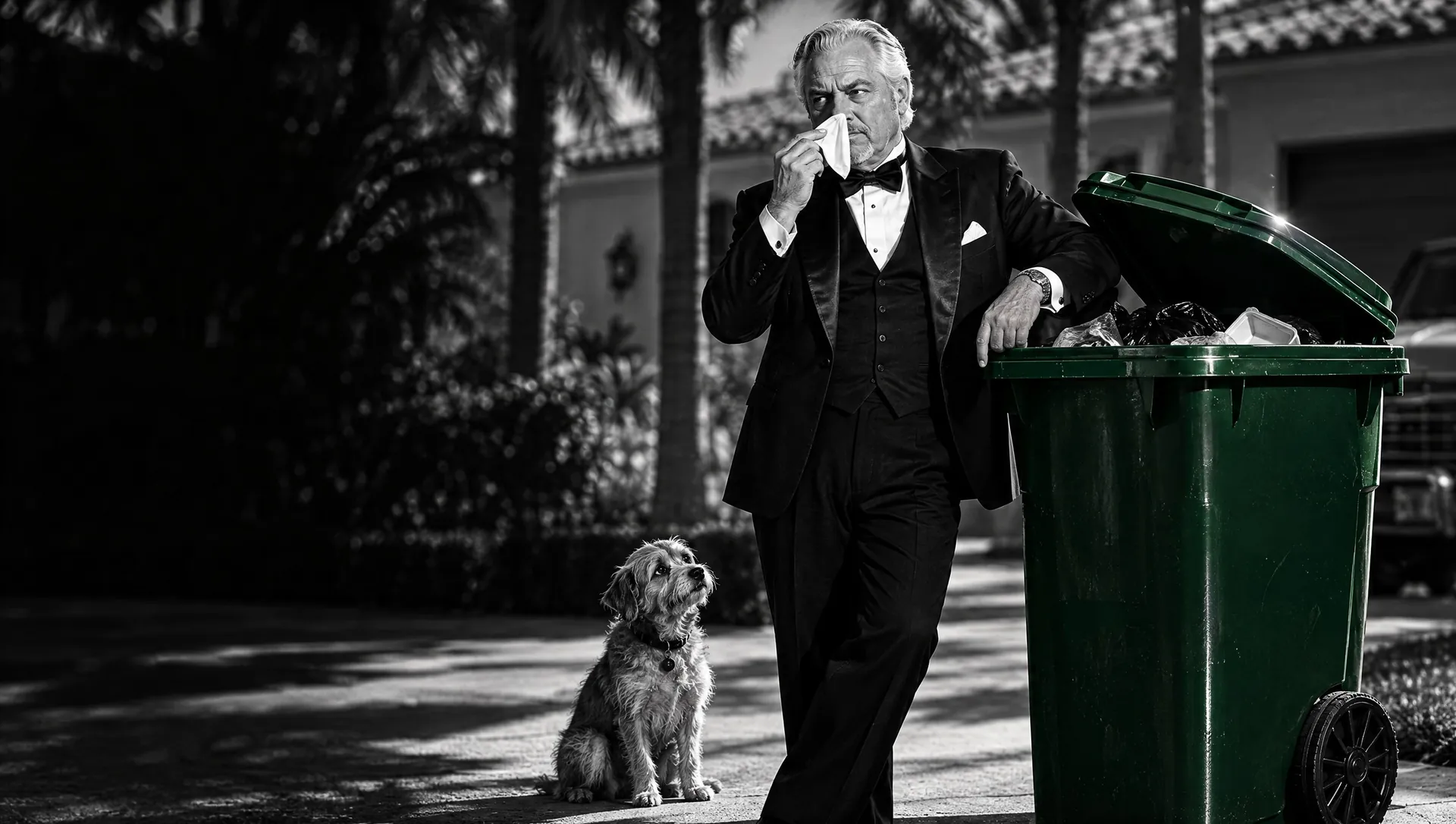
A trash can that takes diapers, dog waste or cat litter smells worse than any other bin in South Florida because it holds urine and feces, not just food. Bacteria turn the urea in urine into ammonia, stool carries its own bacteria, and any leak soaks into the plastic. Tighter bagging slows it down; only a hot-water cleaning removes what has already soaked in.
The BinFather cleans trash carts across Broward, Miami-Dade and Palm Beach County. Here is why a bin that takes a baby's diapers, a dog's waste or a cat's litter turns so fast, and what actually helps.
In this scene · 7 questions
- 01Why do diapers and pet waste make a trash can smell so bad?
- 02Is it safe to put dog poop and dirty diapers in the trash can?
- 03Why is the smell worse with cat litter?
- 04How should you bag diapers and pet waste so the bin smells less?
- 05Can you clean a diaper or pet-waste bin with bleach?
- 06What actually gets the ammonia smell out of a trash can?
- 07How often should a bin with diapers or pet waste be cleaned?
Why do diapers and pet waste make a trash can smell so bad?
Diapers and pet waste make a trash can smell worse than food scraps because they bring two separate sources of odor into the same cart: urine, which bacteria break down into ammonia, and feces, which carry gut bacteria that keep decomposing inside the bag. Food waste has one problem; these bins have both, and both get faster in South Florida heat.
The ammonia is the sharp, eye-watering part. Fresh urine is mostly water and urea, and urea itself barely smells. Bacteria that are everywhere — on skin, in soil, already living in the bin — carry an enzyme that splits urea into ammonia. The longer a wet diaper or a clump of litter sits warm, the more of that conversion happens.
The feces are the heavy, lingering part. They are full of bacteria to begin with, and in a closed plastic cart in the sun they keep breaking down for days.
Is it safe to put dog poop and dirty diapers in the trash can?
Yes. Putting bagged dog waste and used disposable diapers in the household trash can is the normal, recommended way to get rid of them. Hillsborough County's stormwater program, for example, tells Florida pet owners to bag it and throw it in your trash can at home, because waste left on the ground washes into waterways.
The same page notes that pet waste carries bacteria and parasites such as E. coli and hookworm. That is a reason to keep it in the bin, and to keep the bin itself clean.
For diapers, the manufacturer's own advice is simple. Pampers recommends that you empty any solid waste into the toilet before tossing a diaper when possible, and never flush the diaper itself.
Why is the smell worse with cat litter?
Cat litter makes a trash can smell worse because clumping litter is built to trap urine, so every scoop that goes in the bag is concentrated urine waiting to become ammonia. It is also heavy, and heavy bags are the ones that split when they are dropped into the cart or tipped into the truck.
A split bag is where most of the lasting smell comes from. Once urine and litter dust reach the bottom of the cart, they settle into the channel at the base and the scratches in the plastic, and bacteria keep making ammonia there long after the bag is gone.
How should you bag diapers and pet waste so the bin smells less?
The best way to bag diapers and pet waste is to seal each one small and tight, then put those small bags inside the kitchen bag, so nothing wet ever touches the cart. The goal is to keep urine and stool off the plastic, because what never reaches the plastic never needs to be cleaned out of it.
- 01Tip solids into the toilet first. For diapers, this is the manufacturer's own advice, and it removes most of the heaviest smell before the diaper is even bagged.
- 02Roll and seal each diaper. Use the tabs to close it into a tight bundle, then a small bag.
- 03Tie pet waste bags twice. A single knot in a thin bag is the one that opens in the heat.
- 04Double-bag cat litter. It is heavy and it is wet; one bag is not enough.
- 05Do not drop heavy bags from height. Set them in. Most splits happen on landing.
- 06Keep the lid shut and the cart in shade where you can. Heat speeds up every step above.
Can you clean a diaper or pet-waste bin with bleach?
Bleach can kill bacteria on the surface it touches, but it is a risky choice for a bin that has held urine, and it does not lift the film that holds the smell. Urine breaks down into ammonia, and the CDC's guidance is plain: never mix bleach with ammonia or any other cleaner, because the combination gives off dangerous fumes.
In a cart that has taken diapers or litter for months, you cannot know how much ammonia sits in the base. Dish soap and a stiff brush are safer at home, followed by a thorough rinse and a bin left open to dry.
What actually gets the ammonia smell out of a trash can?
Hot water under real pressure is what gets the ammonia smell out of a trash can, because it reaches the dried urine and residue in the base and the seams and flushes it out instead of sliding over it. A garden hose moves loose debris; it does not reach what has soaked into scratched plastic.
That is the work we do. We bring our own hot water and equipment, clean the inside of the cart, the lid and the base channel at the curb, and tidy the area before we leave. The trash bin cleaning page walks through a visit step by step.
How often should a bin with diapers or pet waste be cleaned?
A trash can that takes diapers, dog waste or cat litter every week should be cleaned monthly in South Florida, because the ammonia and bacteria build back up quickly in the heat. A longer interval lets residue harden in the base, and each cleaning then starts from a worse place.
Monthly cleaning with The BinFather is $30 a visit, covering two bins. Every 3 months is $50, and a single one-time reset is $65. Each additional bin is $10, and the monthly plan's year is $30 a month, or $324 paid up front — 10% off the $360. Every figure is on the pricing page.
The short version
Diaper and pet-waste bins smell the worst because urine turns into ammonia and feces keep decomposing, and anything that leaks soaks into the plastic. Tip solids into the toilet, seal every bag tight, double-bag litter, and never mix bleach into a bin that has held urine. Hot water under pressure clears what is already there.
Two bins, cleaned together — $30 a month or $65 once. Book online and we will come on your collection day, once the truck has emptied the cart.